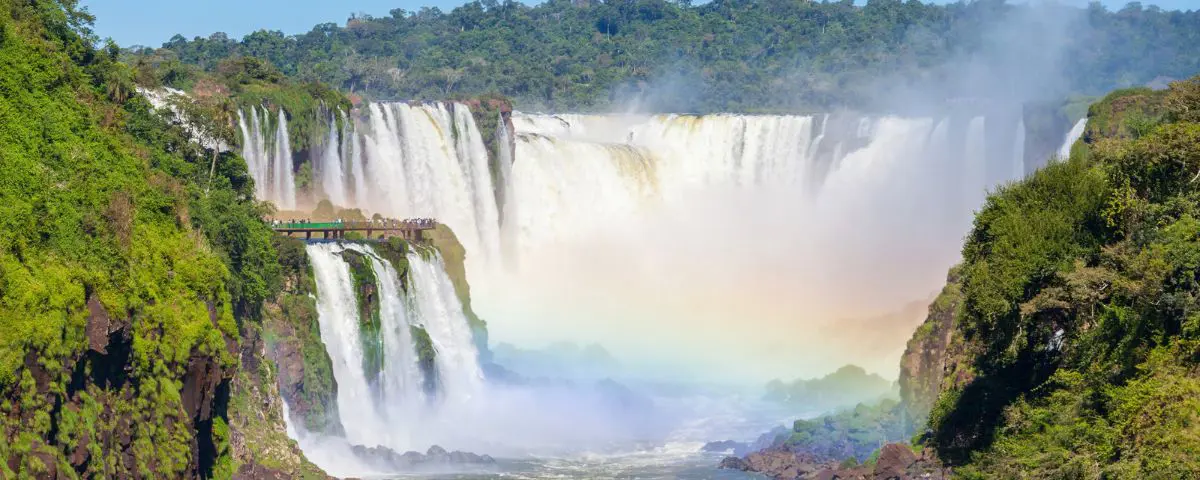
The Argentinian side of Iguazu Falls allows you to walk along walkways next to the falls and requires a full day. The Brazilian side offers a panoramic view of the entire cascade and takes half a day. Ideally, you should visit both sides on two separate days and plan your transfers between Puerto Iguazu (Argentina) and Foz do Iguaçu (Brazil) .
In this guide we tell you what each side offers, how to distribute the days and what to check before leaving.
Which side of Iguazu Falls is better?
If you only have one day, choose the Argentinian side: it's the one that leaves you closest to the falls.
If you have two, combine them, because they're two sides of the same coin and complement each other. Although they're part of the same waterfall system, each offers a different experience and view.
Differences between the Argentinian and Brazilian sides
| Aspect | Argentine side | Brazilian side |
| National Park | Iguazu National Park (Misiones) | Iguaçu National Park (Paraná) |
| Main experience | Walk along walkways between the falls and get close to the waterfalls | Enjoy a panoramic view of the complex |
| Route | Pedestrian circuits and sectors connected by the Ecological Jungle Train | Scenic trail and internal park transport |
| Where to get from | Puerto Iguazu | Foz do Iguaçu, crossing the border from Puerto Iguazú |
| Estimated time | A full day for the main authorized sectors | Half a day, depending on the route and conditions of the visit |
What to do at Iguazu Falls on the Argentinian side?
Iguazu National Park, in the province of Misiones, has walkways and trails that wind through the rainforest. These are the main routes:
- Upper Circuit: shows the jumps from the top and gives you another perspective of the waterfalls.
- Lower Circuit: its walkways approach the base of the waterfalls and allow you to appreciate their magnitude.
- Devil's Throat: one of the most iconic areas. It can be reached via the Jungle Ecological Train and a pedestrian walkway.
If you'd like a unique experience, you can also take the Full Moon tour to Iguazu Falls. This guided nighttime tour runs five nights a month and allows you to admire the falls under the moonlight.
The duration depends on the available routes, your walking pace, and how long you want to stay at each viewpoint.
Important tip: Trail conditions can change due to river flooding and safety reasons. Therefore, before traveling, check which sections are open and do not assume access to that point is guaranteed.
If you'd like to add something different: La Aripuca is a huge wooden structure inspired by a traditional Guarani trap, surrounded by the Misiones rainforest. It's not a must-see if you're short on time, but if you've already visited the Falls and want to experience another side of Iguazu, it can be a nice addition to your itinerary.
What to do at Iguazu Falls on the Brazilian side?
Iguaçu National Park , in the state of Paraná, is renowned for its sweeping views of the Argentine side of the falls and the entire cascade. If you have binoculars, they can be very useful for appreciating the scenery.
The main route combines the park's internal transport with a pedestrian path leading to various viewpoints. As you walk along, you'll see the vastness of the waterfalls.
It usually takes less time than the Argentinian side, although it depends on the number of visitors, waiting times, and access conditions. Then you can use the rest of the day for other activities in Foz do Iguaçu. You can also return to Puerto Iguazú.
How many days are needed to visit both sides of Iguazu Falls?
To explore them at a leisurely pace, it's best to dedicate two separate days.
Day 1: Argentinian side. Explore the designated trails, enjoy the viewpoints, and discover the jungle.
It's worth setting aside more time because there are several routes. If you prefer a guided tour, you can check out the Iguazu Falls tour on the Argentinian side.
And if you're looking for an adventure, there's the Great Adventure Tour: it includes a boat ride and lets you experience the power of the water up close. I did it a few years ago and I still remember being under the waterfall, passing between the water and the rocks, and seeing them up close from behind the falls. It's one of those unforgettable experiences.
Day 2: Brazilian side. Arrange a half-day visit to the trail and viewpoints that offer a panoramic view of the falls.
Add the time to cross the border and return to your accommodation. You can also book the tour of Iguazu Falls on the Brazilian side.
Before planning each day, check which routes are open and what immigration requirements apply.
One last tip to wrap up your day: if you're staying in Foz do Iguaçu after the Falls, you can take the opportunity to try a Brazilian churrascaria. Rafain Churrascaria Show is a classic option in the city, combining a meat rodizio with a Latin American music and dance show. It's ideal if you want to add a touch of Brazilian flavor to your trip.
Useful information before you go
- Argentine side. Visiting hours and conditions may change depending on the season, holidays, and the park's status. Before traveling, consult the official information on opening hours, fees, and ticket purchases for Iguazu National Park. If you are traveling with a tour, check if the entrance fee is included.
- Brazilian side. Iguaçu National Park is open every day of the year, and visiting the falls requires booking entry with a specific day and time.
How to get from Puerto Iguazú to the Falls on the Brazilian side?
To visit Iguazu Falls on the Brazilian side, you have to cross the border and get to Iguaçu National Park . You can do this on your own or book a tour with transportation included.
The crossing is made via the Tancredo Neves International Bridge , which is open 24 hours a day for private vehicles. During peak season and holidays, there can be long lines, so allow extra time. Immigration offers online pre-registration for Brazil, which can save you paperwork at the border. With a tour that includes transportation, the operator will arrange the crossing, but you should still bring your documents.
If you're traveling independently, check the available transportation options and factor in immigration processing times. If you choose a tour, verify the pick-up point, duration, guide's language, and whether park entrance is included in the price.
Do I need documentation to cross into Brazil? It depends on your nationality. Check the relevant immigration requirements and bring the necessary documents. If you are traveling with minors, also check what authorizations may be required.
What to do in Iguazu if circuits are closed due to weather
Flooding of the Iguazu River may cause preventative closures of walkways and trails. If you already have your trip planned, you can adapt your itinerary according to the open areas and take the opportunity to explore other attractions in the region.
- An adventure experience with Jungle Fly in small groups.
- A day of historical and natural heritage in Misiones with an excursion to the San Ignacio Ruins and the Wanda Mines.
These excursions do not replace a visit to the falls, but they help you reorganize your itinerary and continue to make the most of your stay.
And… one place worth adding to your list: if you have some free time in Puerto Iguazú, head to the Three Borders Landmark , especially at sunset. From there you can see where the Iguazú and Paraná rivers meet, and on the other side of the water, make out the coasts of Brazil and Paraguay. It's one of those places where you stand for a while admiring the scenery and think: “How amazing to be seeing three countries from the same spot.”
Tips for organizing your visit
- Purchase tickets through official channels: check current rates, schedules and conditions for each park before traveling.
- Check the status of the circuits: verify which sectors are open before planning your route.
- Wear comfortable clothing and appropriate footwear: you will be walking on outdoor trails and walkways.
- Bring rain gear: the moisture and splashes from the jumps can get you wet. Nothing a waterproof jacket can't fix!
- Protect your belongings: a waterproof case protects your phone, camera, and documents.
- Plan your transfers in advance: take into account travel times and border controls, especially if you have activities scheduled for the same day.
Visit Iguazu Falls from Argentina and Brazil
Knowing both sides is the best way to understand the diversity of this world heritage.
In Argentina, life is experienced with all five senses : you're not looking at a postcard, you're standing right where the river breaks.
And if the Argentinian side provides the adrenaline and the jumps, Brazil provides the panoramic view of the movie-like waterfalls.
Iguazu Falls was chosen as one of the 7 Natural Wonders of the World by the New7Wonders organization in 2011. You can't miss them!
Finally, if you prefer to simplify your planning, you can check out the Iguazu Falls tour in Argentina and Brazil with transfers included. Review the conditions before booking and focus on enjoying one of the most incredible landscapes in the world.
By: Agustina Panzani, Content Creator for BestArgentina.com
Published by BestArgentina.tours on 17/11/2026